Seattle educators will start teaching elementary students to read using the science of reading method, after the Seattle School Board unanimously approved a new English language arts curriculum this month.
Seattle Schools Overhaul Early Reading with Science-Backed Curriculum
Seattle educators will start teaching elementary students to read using the science of reading method, after the Seattle School Board unanimously approved a new English language arts curriculum this month.
The Seattle School Board voted to adopt the new curriculum for K-5 students on April 22, marking the first time Seattle Public Schools' core instructional materials officially embrace the science of reading. Teachers will start using the updated curriculum in September, when the new school year begins.
The science of reading is a teaching approach informed by decades of brain science research that identified the most effective strategies for teaching kids to read. The district's previous curriculum did not include teaching instruction aligned with this research, meaning teachers who wanted to incorporate the science of reading had to find ways to add it to the existing curriculum.
The movement to embrace the science of reading has swept through classrooms nationwide - and state legislatures, including Washington's. Last month, the Washington Legislature passed a bipartisan bill requiring school districts to adopt a curriculum for students in kindergarten through fourth grade that aligns with research on how best to teach children to read.
A team of 38 Seattle teachers - including reading interventionists and literacy coaches - principals, district leaders and parents spent 18 months evaluating and field-testing curriculum from eight different vendors in several district classrooms. The committee ultimately recommended McGraw Hill's Emerge Elementary School Curriculum to the School Board.
The Lake Washington School District in Redmond, the state's second-largest school district, also adopted Emerge on April 28. Lake Washington is one of the top-performing districts in academic test scores in the Pacific Northwest.
Members of the Seattle adoption committee said Emerge outshined the other curricula because of its user-friendly approach to teaching structured literacy. It instructs teachers to help students break words down, for example identifying the beginning, middle and end sounds and blending them together when they read and spell. It is also focused on phonics delivered in a direct, repetitive way.
The curriculum will change the way teachers support struggling readers, said Kathleen Vasquez, Seattle Public Schools' literacy program manager. In the past, teachers might have separated students who were struggling to read, offering separate instruction only to that group's reading level while the rest of the class advanced. With the new curriculum, teachers will teach to the whole group, making sure even struggling readers are taught grade-level curriculum, ensuring students aren't left behind.
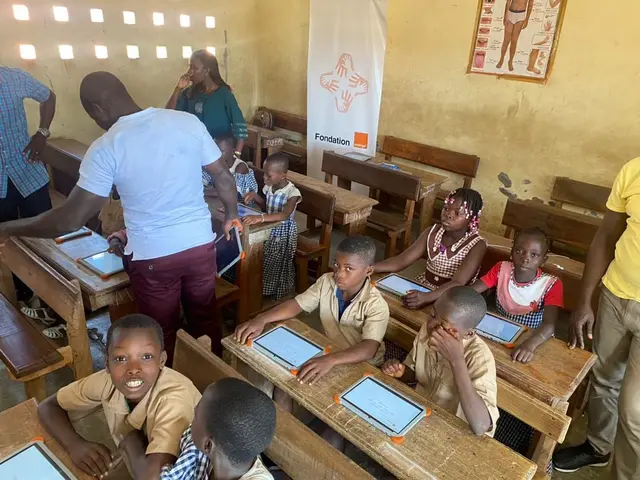
But whole-group instruction doesn't mean the entire group will be brought down, Vasquez said. The curriculum includes 20 minutes of each instructional block for students to work in focused study groups, where they can practice individual reading activities that will challenge and advance them. These 20-minute blocks will take place on tablets or iPads, and could include games - a part of the curriculum that made some School Board members initially wary.
At the April 22 board meeting, Kathleen Smith, SPS board director for District 2, said community members are concerned that the allotted 20 minutes would expand into longer amounts of time using devices.
Mike Starosky, assistant superintendent of academics for SPS, said he couldn't guarantee that wouldn't happen, but stressed that the district is training teachers to be strict on limiting students to the planned 20 minutes on screens per instructional block.
When board members voiced similar concerns at the March 18 meeting, Cashel Toner, the district's director for curriculum, assessment and instruction, noted that the curriculum's digital component will provide teachers digital portals that can simplify tracking individual students' progress in real time.
"That offers a real opportunity digitally for collaboration," Toner said, especially for a team of teachers. "(That) could be really powerful."
Yet skepticism about any curriculum that involves screens remains high, especially as parents and educators continue to raise concerns about students on cellphones and laptops during the school day. In the March 18 board meeting, several board members voiced concerns about Seattle's youngest students learning to read behind a screen instead of holding physical books.
At the same meeting, SPS Superintendent Ben Shuldiner noted the Emerge curriculum had not yet been vetted by Ed Reports, an independent nonprofit that vets curricula for free. Emerge was reviewed by Colorado's Department of Education and met expectations, which is the best rating, in every category.
Overall, members of the adoption committee said the curriculum is more rigorous, provides more support to teachers who will adjust instruction to each student's needs and has a good balance of in-person versus digital instruction. It also has multisensory routines that support students at risk of having dyslexia, teacher corrective feedback and technical support for students who aren't accessing the lesson that day.
Members of the adoption committee also highlighted how comprehensive and detailed the curriculum is, which they believe will better support teachers in creating cohesive lesson plans.
That consistency across classrooms could have positive impacts for students, noted Rojine Rudio, a parent at Louisa Boren STEM K-8, who used to teach elementary school literacy in a different district and served on the adoption committee.
"I think we're going to start seeing student outcomes that are more consistent," Rudio said. "I think Emerge will level out the playing field."
The books students are assigned under the new curriculum are also more culturally responsive and more advanced than the old curriculum, committee members said. Authors newly added to the curriculum include Shel Silverstein, Langston Hughes, Grace Lin, Pat Mora and Ibtihaj Muhammad, among others.
"It was really important to us that we had texts in front of our children that were something they could check out from a library or see in a bookstore," said Brandee Spencer, a committee member who is also principal of Thornton Creek Elementary.
Implementing the new curriculum for the 2026-27 school year will cost Seattle Public Schools $5,775,744 through 2032-33. The district will begin training school leaders on the curriculum in May, and will begin training teachers in June and continue through the 2028-29 school year.
The district is using funds from the capital levy approved by voters in February 2025 to pay for the new curriculum. Stipulations on how those funds can be used require the curriculum to include technology use.
"It's not ideal for the district to be using levy funds to purchase instructional material, but that is our reality right now," said Toner, the SPS director of curriculum, assessment and instruction, at the March 18 board meeting. "It's kind of a good opportunity for us, but it's challenging that this could be one of our most important responsibilities - teaching kids how to read - and we need to make that purchase outside of general fund dollars. That is unfortunate."
Read also:
- Executive from significant German automobile corporation advocates for a truthful assessment of transition toward electric vehicles
- Crisis in a neighboring nation: immediate cheese withdrawal at Rewe & Co, resulting in two fatalities.
- United Kingdom Christians Voice Opposition to Assisted Dying Legislation
- Democrats are subtly dismantling the Affordable Care Act. Here's the breakdown