Paulo Fernandes, Named Best Digital Leader in 2025, Reflects on Fundão's Digital Transformation
How a Tiny Portuguese Town Became a Booming Digital Innovation Hub
Over the past decade, Fundão has evolved from a region with little technological presence—home to just three IT engineers—to a thriving digital hub with over 1,200 skilled professionals in a town of 12,000 residents. In 2025, Paulo Fernandes was awarded Best Digital Leader at the Portugal Digital Awards. In this interview, part of a project by Expresso supported by Axians, Fernandes—now overseeing the mission structure for areas affected by Storm Kristin—discusses the country's technological challenges.
Paulo Fernandes, is transformation the way forward?
Absolutely. I believe it's one of the greatest drivers of development, quality of life, and ultimately, the kind of society we build. While we often talk about smart cities, I prefer the broader concept of intelligent territories—one that reflects Portugal's reality, with its stark contrast between metropolitan areas and rural regions. But what truly excites me is the idea of smart communities. Digital innovation can be the game-changer across all three dimensions—cities, regions, and, most importantly, people—enabling a leap toward more sustainable and equitable development in our country.
Have these goals been achieved? What is Fundão like today?
Fundão has undeniably become a magnet for digital talent. When we started, I'm almost embarrassed to admit, there were just three IT engineers in the entire town. By the time I left, that number had grown to over 1,200. In a city of 12,000, this shift has had a profound impact across diverse sectors. Initially, it attracted larger companies drawn by the talent pool, but the transformation soon spread to traditional industries—from agriculture (Fundão is famous for its cherries) to tourism, precision engineering, and even social innovation. Innovation became the cornerstone of our development strategy.
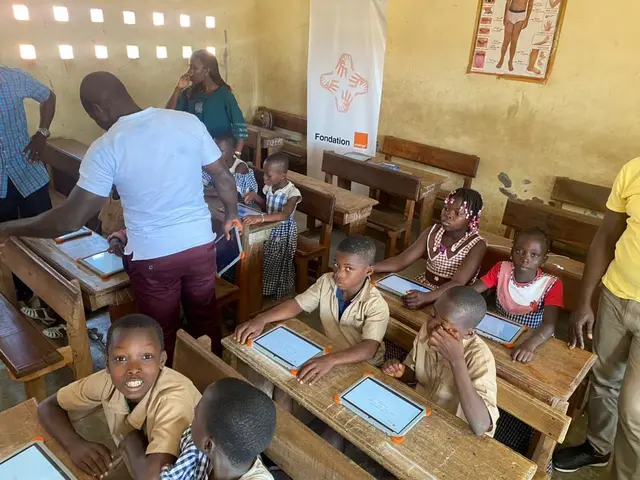
Another remarkable aspect is how we brought digital education to the community. Every child now learns programming from age six and explores artificial intelligence from age eight. These initiatives have become case studies not just in Portugal but across Europe. We've transitioned from a region with little innovation to one that's now on the radar of every forward-thinking sector—particularly in digital—but we've also shown how education can drive real change through technology.
Is it this real-world impact that draws people in?
At its core, it's always about people. But more pragmatically, today's priorities revolve around quality of life—its affordability, the value created within the community, and the sense of belonging to an ecosystem where everyone contributes. It's no longer just about being part of a system; it's about co-creating it, adding value every day. We're talking about governance models built on co-creation, shared power between citizens, local entities, government bodies, and a growing scientific and technological network, including new competence centers.
How do you see the rest of the country through the lens of your experience?
I believe we've helped shift the local governance paradigm to some degree. Local government had its remarkable moment of democratic affirmation and played a fundamental role in building the country's infrastructure. Now, I think it's entering new contexts—what we might call the paradigm of value creation: social value, cultural value, economic value, environmental value, public value. In other words, policies increasingly focused on impact, with the digital paradigm clearly facilitating this process. I think we've contributed to ensuring that far more municipalities now have a digital innovation agenda as part of their development strategy. Some have even embraced it as a major benchmark. Above all, this has also fostered a universal language. When you think about it, universal languages help us engage more fully with the world. It has also been crucial in bridging the local and the global, in nurturing new ways of thinking about national cohesion—where proximity is no longer a prerequisite. The digital world truly enables people to work remotely, to create remotely. That, of course, makes life far easier.
So you're optimistic. Is Portugal on the right track?
I think Portugal is doing better in the digital sphere than in other areas. The key question—and perhaps this is my small contribution to the process, maybe even what earned me the sympathy to be named Digital Leader of the Year—is how we transfer the value generated by so many companies that have chosen Portugal, so many startups that have thrived (some even becoming international success stories), and so much industry that has transformed into something truly relevant. All of this is happening in our country, but the central challenge is how to distribute that value throughout the community and how to ensure that community takes a leap in capacity and equality of opportunity—especially through digital means. Coming from a low-density region where success seemed unlikely, I might also serve, I don't know, as an example—or at least help make Fundão a kind of beacon, proving that progress is possible and sending a more positive signal about the country.
Can you already anticipate trends for the near future? Artificial intelligence is obviously one of them, isn't it? But what else can we expect?
Artificial intelligence is one of the key areas when it comes to ever-expanding applications. Looking at the digital landscape—particularly in terms of investment—it seems clear to me that the links between energy and digital sectors will only grow stronger, and the country must prepare even more effectively for this shift.
The second major point is that we'll see new approaches to building ecosystems. I often discuss this because we tend to view trends either through the lens of technology or specific applications. But I prefer to examine the digital world from a very pragmatic perspective: what opportunities does it bring to our country? Having spent many years as a local official, it's hard to escape that opportunity-driven mindset. I believe we need to rethink models for work and housing, for instance. Work, living spaces, and knowledge-transfer hubs must be far more interconnected, with more integrated projects emerging around these challenges.
And, of course—tying this to a topic very much in the spotlight today—I see a pressing need to move beyond the smart cities approach toward a far more territory-focused strategy, precisely because of risks, particularly climate-related ones. It's crucial that the digital sector, which is already so prominent, also zeroes in on this area. There are enormous opportunities here—entirely new industries to explore, fresh avenues for creating value, such as shorter supply chains and product traceability. But above all, we must take a proactive stance in the face of the intense and extreme events we're experiencing. Prevention is no longer optional; it's essential.
Read also:
- Executive from significant German automobile corporation advocates for a truthful assessment of transition toward electric vehicles
- Crisis in a neighboring nation: immediate cheese withdrawal at Rewe & Co, resulting in two fatalities.
- United Kingdom Christians Voice Opposition to Assisted Dying Legislation
- Democrats are subtly dismantling the Affordable Care Act. Here's the breakdown