How a Kazakh Teacher Uses Debate to Transform Young Lives
A Debate Club Where Voices Find Their Own Words
The classroom where the Rhetoric debate club meets is rarely quiet. Here, arguments flare, voices overlap, phrases are reworked, laughter breaks out, thoughts stumble and restart. To an outsider, it might sound like ordinary school noise. But for Nurken Zhaquen—a high school English teacher and the club's founder—this is the very moment it was all for: a child speaking not in memorized phrases, but in their own words, struggling to make their point heard.
At just 26, he already serves as deputy director for educational affairs at School No. 80 in Aktobe. Yet for a decade now, Nurken Dauytbayuly has been immersed in the world of debate. At first glance, he fits a vivid profile: a young educator fluent in multiple languages, commanding attention with ease, his mind attuned to modern thinking. But beneath the surface lies something deeper—a refusal to force children into prefabricated molds, and instead, a quiet determination to help them find themselves.
It's no coincidence that one of his favorite films is Dead Poets Society. The 1989 American coming-of-age drama, directed by Peter Weir from Tom Schulman's Oscar-winning script, tells the story of a literature teacher who returns to the elite boys' school where he once excelled—only to use poetry as a tool to ignite his students' self-expression. For Nurken, the film is more than a touching story or a nod to romanticism. It's nothing short of a pedagogical manifesto: a call for free thought, the right to one's own path, and the quiet courage to be oneself.
"Carpe diem—'seize the day,'" he says, quoting the film's famous line. "But to me, it's not just a poetic phrase. It's about living your own life, not just meeting others' expectations."
This is the idea he strives to impart to his students—through lessons, conversations, debates, through the very feeling that school should be a place where their voices matter.
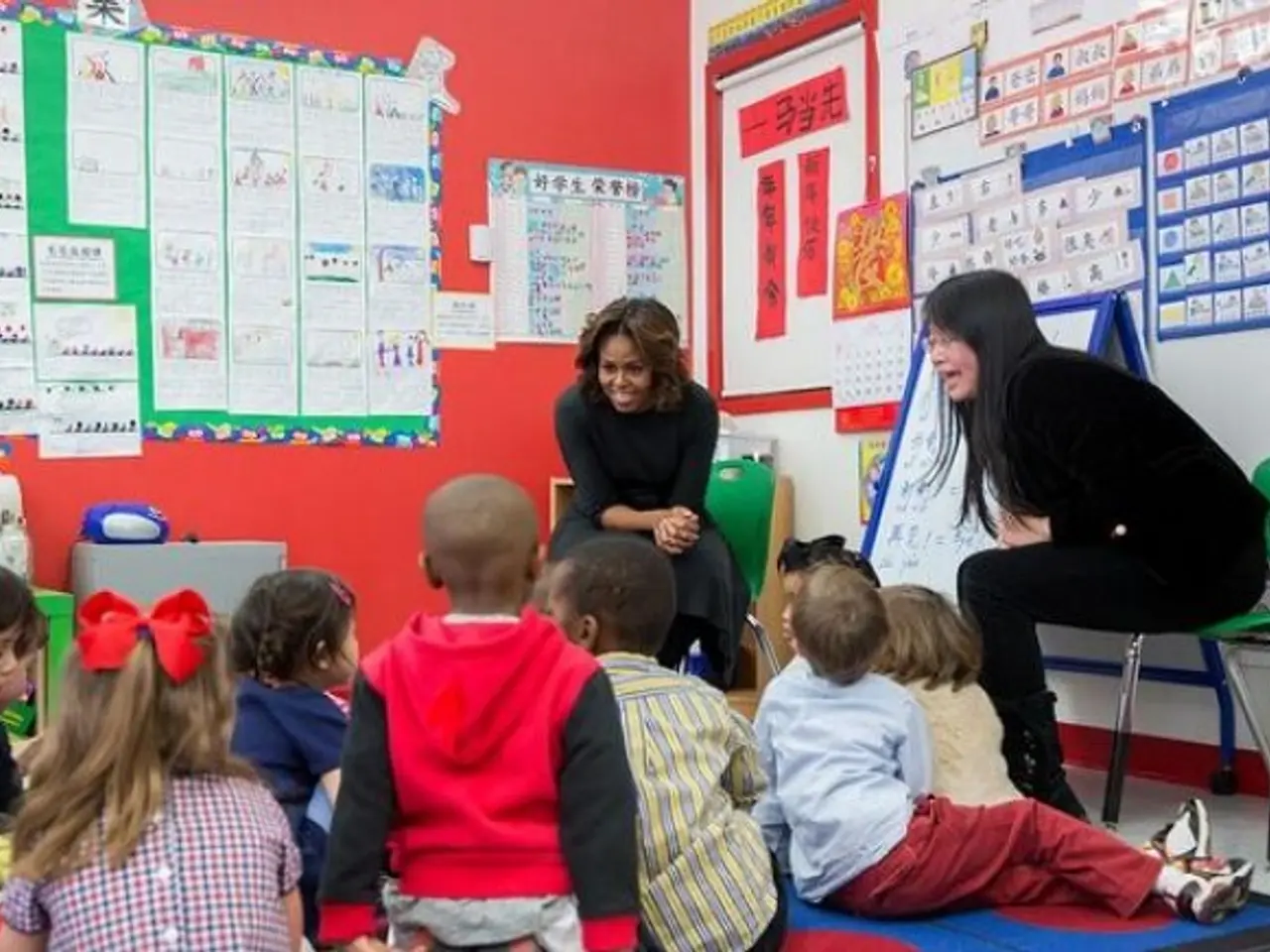
When he walks into a classroom, nothing shifts abruptly. No one snaps to attention; the hum of chatter doesn't vanish instantly. Instead, the air itself seems to lighten, as if the room has suddenly filled with more space to breathe.
"I'm not their teacher," he says with a smile. "I don't even aim to be. To them, I'm more like… 'that guy with the cool vibe,' as they put it."
Watching him, it's clear this ease isn't an attempt to be one of them at any cost. It's a rejection of unnecessary distance—a belief that authority doesn't require barriers.
Nurken's story didn't begin in the classroom. It started long before, in a family where knowledge wasn't a duty but a natural part of life.
"My mother didn't just say, 'Study.' She led by example—showing that growth is the norm," recalls the teacher. "I always had my twin brother by my side—both my support and my inner challenge. We had this unspoken competition: who could solve the problem faster, who could grasp it more deeply. But we always pushed each other forward. And today, we're both in education—not by coincidence, but as a continuation of that mindset we grew up with."
His first real sense of language didn't come from textbooks. It struck him the moment he responded spontaneously in a foreign language—no preparation, no memorization. And he was understood.
"I wasn't thinking about grammar. I wasn't translating in my head. I just spoke. It was exhilarating!" he remembers.
Since then, language hasn't been a set of rules for him—it's a way of experiencing the world. As Nурken explains, each language evokes a different state of being: English brings freedom, Chinese sharpens focus, German imposes structure, and Kazakh connects him to something deep within.
"When you know multiple languages, it's like opening not just one window to the world, but several at once," says Nурken Dauytbayuly.
One of his open classes had an unexpected theme: the mobile game Brawl Stars. To capture the attention of eighth graders, he started playing it himself. The lesson was loud, emotional—kids argued, cheered, and scrambled to claim their favorite characters. But beneath the noise was the most important thing: engagement.
"Practice. More practice. Without it, language doesn't work," the teacher reveals.
And that's the core of his approach: not forcing students to learn, but making them want to speak.
He doesn't hide that he has favorites—but not in the usual sense. It's about connection. Anya from the debate club is almost like a little brother to him:
"I know he'll soon become the absolute champion of Kazakhstan."
Batyrzhan, a seventh grader, is someone he genuinely believes in:
"Languages come easily to him. I'm certain he'll achieve great things."
Recently, one of his 11th-grade students, Kundyz Dauyl, competed in the national Sirius Cup X debate tournament and won a scholarship to Turan University. To an outsider, it's just good news. To him, it's proof that his method works. She articulated her thoughts. She wasn't afraid to speak. She believed in herself. In those few words lies the essence of Nурken Zeken's work.
"You know, students support their teacher too. It's not a top-down system—it's a movement toward each other," he clarifies.
But it's not just his students who give him these special moments. The school itself—its smells, its sounds—has a positive effect on him. His favorite? The scent of a book, a symbol of knowledge. And the smell after rain—the kind you can't experience without the rain itself.
Success is the same—it doesn't come without effort, my interlocutor reflects.
He doesn't romanticize the profession. There's fatigue, there are doubts. Sometimes you just need to pause, put on your headphones, and play your favorite songs—Lana Del Rey or Billie Eilish—to catch your breath for a moment. And sometimes, you have to allow yourself a simple, honest moment of vulnerability.
When I ask what his ideal lesson looks like, he replies:
"Probably one where the children look forward to seeing you and love what you do..."
Everything else is part of the process—mistakes, noise, doubts, small and big victories. And perhaps this, in all its imperfection, is what the new school is about today. Where being a teacher isn't just a role—it's a state of mind.
Read also:
- Executive from significant German automobile corporation advocates for a truthful assessment of transition toward electric vehicles
- Crisis in a neighboring nation: immediate cheese withdrawal at Rewe & Co, resulting in two fatalities.
- United Kingdom Christians Voice Opposition to Assisted Dying Legislation
- Democrats are subtly dismantling the Affordable Care Act. Here's the breakdown