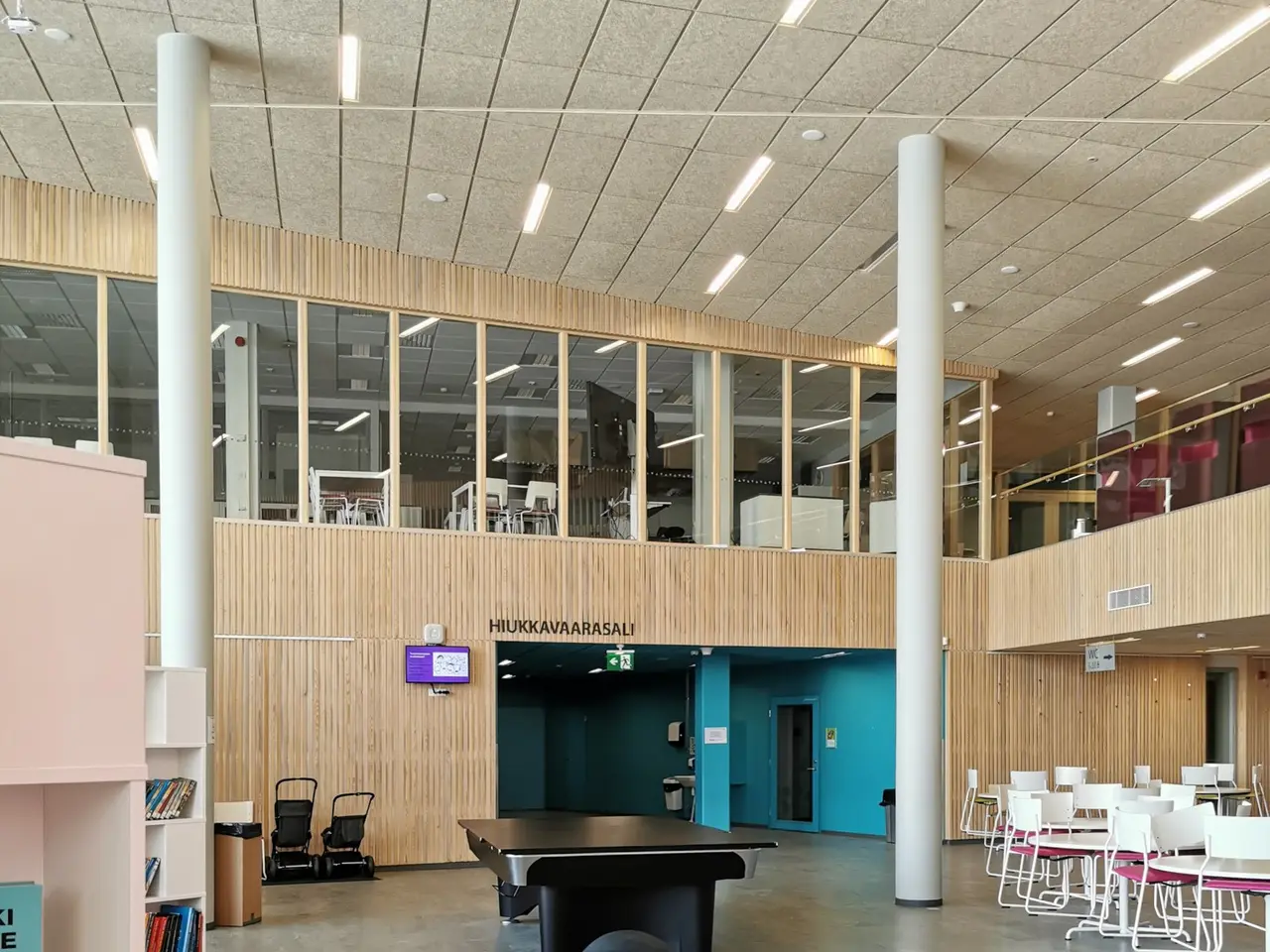
Giessen's Ludwig-Uhland-Schule unveils a sustainable €5M cafeteria hub
A Place to Eat, Learn, and Connect: Giessen Sets the Standard for Modern Educational Infrastructure with New School Cafeteria
The official opening of the new cafeteria at Ludwig-Uhland-Schule on Aulweg marks a milestone in Giessen's commitment to forward-thinking, future-proof education. Though the building has been in use since January 2025, the ceremonial inauguration now formally hands over the state-of-the-art facility to the school community.
Ludwig-Uhland-Schule is a full-day primary school participating in Hesse's "Pact for All-Day Education" program. With around 320 students from grades 1 to 4—organized into three or four classes per year—the school previously relied on two 1960s-era pavilions, over 50 years old, for its lunch service. These outdated structures were neither structurally nor functionally equipped for modern all-day operations. "The new building now provides lasting, ideal conditions—creating an optimal environment for learning and social interaction. This is an investment in our children's future," emphasizes Francesco Arman, Giessen's city councilor for schools.
Designed to accommodate up to 160 children per seating, the cafeteria operates in two shifts. The kitchen functions as a servery, where freshly prepared components are reheated on-site. A spacious foyer with drinking stations ensures smooth transitions during the midday break. The dining hall itself features an open, inviting design, with exposed wooden beams and light materials that foster a warm, welcoming atmosphere—making it a true hub for daily school life.
Beyond its core function, the new building includes additional spaces for all-day programs and educational projects. A teaching kitchen enables nutrition workshops and hands-on learning, while a 70-square-meter cultural education room can host music and theater activities. With an adjacent instrument storage area and the flexibility to serve as a stage for school events, the space also takes on the role of an assembly hall. The entire facility is fully accessible, including stage access.
The project began with an architectural competition in 2019/20, won by mijic architects, with studio.aw from Giessen overseeing construction management. Built to low-energy standards, the facility meets high ecological benchmarks, incorporating a photovoltaic system, green roof, and rainwater cistern for sustainable operation. "This commitment to sustainability is also reflected in the design—from the solid wood walls and ceilings to the untreated larch wood façade," explains Astrid Eibelshäuser, head of the city's building authority.
Funded through Hesse's Municipal Investment Program (KIP II – "KIP Makes School") with approximately €3.3 million, the total project cost amounts to €5 million. Numerous local businesses contributed to construction, strengthening the regional economy and craftsmanship. Concurrently, the school's outdoor areas are being redesigned, with completion expected later this year—further enhancing the Aulweg campus as a vibrant, modern learning environment.
Read also:
- Executive from significant German automobile corporation advocates for a truthful assessment of transition toward electric vehicles
- Crisis in a neighboring nation: immediate cheese withdrawal at Rewe & Co, resulting in two fatalities.
- United Kingdom Christians Voice Opposition to Assisted Dying Legislation
- Democrats are subtly dismantling the Affordable Care Act. Here's the breakdown