Austria's Bold Education Reform Extends Primary School and Adds New Subjects
Austria's Education System Must Shift "from Catch-Up to Fast Lane," Says Minister—But Will His "Plan Future" Succeed?
Christoph Wiederkehr of the NEOS party aims to overhaul Austria's education system with his newly unveiled "Plan Zukunft" (Plan Future, or Plan Z), which includes proposals for six years of primary schooling, new subjects, and a revised secondary school qualification. But which of these reforms will actually be implemented—and when? And will his coalition partners agree?
Pilot Regions for Six-Year Primary Schools
In an interview on ZiB 2 with Armin Wolf on Tuesday, Wiederkehr emphasized that Plan Zukunft is "my plan as education minister"—one designed to extend beyond the current legislative term. Coalition negotiations have already secured agreement on trial regions where 10- to 12-year-olds would attend primary school for six years instead of four. The initiative would begin with "individual voluntary pilot regions," though Wiederkehr acknowledged that further discussion with coalition partners is needed.
He justified the pilot approach by citing past issues with model regions, including implementation challenges and unclear legal frameworks. The new trial sites would be voluntary and "scientifically monitored."
Wiederkehr expressed "great confidence" that six-year primary schools would be introduced "during this legislative period," though he does not expect a nationwide rollout until after the current term.
New Secondary Qualification from 2029
On the proposed Mittlere Reife (intermediate school-leaving certificate), Wiederkehr said discussions are underway with social partners, including the Chamber of Commerce, the Chamber of Labor, and the Federation of Austrian Industries. A "relatively concrete model" is currently being debated, with implementation slated to begin in 2029. The goal is to ensure that all students leave school with adequate reading, writing, and math skills.
Regarding compulsory education, he clarified that it could be fulfilled "either in school or through an apprenticeship with additional support and training"—meaning traditional schooling would not be the only option, though structured learning opportunities would remain mandatory.
All-Day Schools: "Parental Choice Must Come First"
For lower secondary education (Unterstufe), Wiederkehr announced two new subjects: "Democracy, Communication, and Economics" and "Career Orientation." He did not specify which existing subjects or content might be reduced to make room, instead pointing to ongoing discussions with an expert commission and school partners. His directive, however, is clear: "We can't just keep adding more—something has to give." Asked whether traditional subjects remain relevant, he replied, "Partially," advocating for a review of curricula to create space for modern priorities.
On all-day schooling, the minister reiterated his support for parental choice, though he admitted that many regions currently lack sufficient full-day options. He argued that extended school models improve equity, language skills, and student well-being by blending instruction with leisure activities. At the same time, he acknowledged that "there are also excellent half-day schools."
School Performance Data to Be Published
Addressing the upcoming release of school performance data, Wiederkehr cited Austria's Freedom of Information Act, which now permits the publication of comparative school statistics. As a federal minister, he said he must comply with the law and would need parliamentary majorities for any changes—the current regulations reflect a parliamentary compromise.
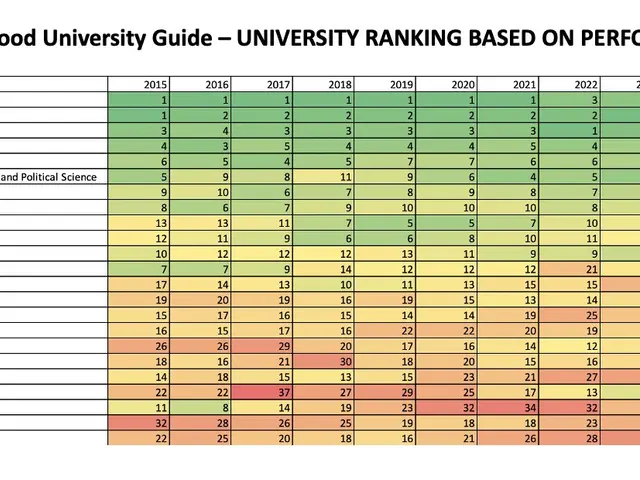
The data, he argued, should drive improvements at individual schools, particularly in areas like German-language support, while promoting transparency. Schools will be informed in May about which metrics will be disclosed, including performance comparisons with similar institutions, as well as figures on student numbers, specializations, and additional support programs. From the next school year, the data will be publicly available on the Education Ministry's website.
Read also:
- Executive from significant German automobile corporation advocates for a truthful assessment of transition toward electric vehicles
- Crisis in a neighboring nation: immediate cheese withdrawal at Rewe & Co, resulting in two fatalities.
- United Kingdom Christians Voice Opposition to Assisted Dying Legislation
- Democrats are subtly dismantling the Affordable Care Act. Here's the breakdown